Buy فرکانس.com ?
We are moving the project
فرکانس.com .
Are you interested in purchasing the domain
فرکانس.com ?
domain@kv-gmbh.de · 0541-91531010
Buy فرکانس.com ?
What is frequency, angular frequency, peak factor, amplitude, and instantaneous value?
Frequency is the number of occurrences of a repeating event per unit of time, typically measured in hertz (Hz). Angular frequency is a measure of how quickly an object moves through a circular path, and is measured in radians per second. Peak factor is the ratio of the peak value of a waveform to its RMS (root mean square) value, and is a measure of the waveform's peakiness. Amplitude is the maximum displacement or distance moved by a point on a vibrating body or wave from its central position. Instantaneous value refers to the value of a varying quantity at a particular instant in time. **
What is the difference between frequency modulation and amplitude modulation?
Frequency modulation (FM) and amplitude modulation (AM) are two different methods used in radio broadcasting to carry a signal. The main difference between the two is how they vary the carrier wave to transmit information. In AM, the amplitude of the carrier wave is varied in proportion to that of the input signal, while in FM, the frequency of the carrier wave is varied. FM is known for its better sound quality and resistance to noise, while AM is simpler and has a longer range. **

Similar search terms for HarperCollinsChildren-sBooks-Up-and
Top-Angebote
Products related to HarperCollinsChildren-sBooks-Up-and:
-
Inspired Deals Digital Transceiver For Low Latency Drone Video Transmission Stable Signal Module Digital Transceiver For Low Latency Drone Video Transmission Stable Signal ModuleTake control of every flight with confidence and clarity. This DJI Neo 2 digital transceiver is designed for drone enthusiasts and professionals who demand smooth, realtime video transmission without frustrating delays. Whether you're capturing...64,97 $*Shipping: 0,00 $Secure redirect to the provider
-
Tools, Home & Hobby 15L Ultrasonic Cleaner With 40kHz Frequency And Digital Heater Timer 15L Ultrasonic Cleaner With 40kHz Frequency And Digital Heater TimerClean jewelry, tools, eyewear, and automotive parts with this 15L ultrasonic cleaner, designed for thorough cleaning of delicate and hardtoreach surfaces. Using 40kHz ultrasonic technology, adjustable heating, and dualpower degassing, this digital...399,97 $*Shipping: 0,00 $Secure redirect to the provider
-
L'Oréal Professionnel Vitamino Color Spectrum Shampoo 300ml and RinseHair colour treatments are time consuming and can be expensive - that's why its so important to care for your hair properly, from the moment you step out the salon. Get ready to lock in vibrant Color from day one - for up to 100 days - with the Vitamino Color Spectrum Professional Shampoo 300ml and Rinse Off Hair Mask 250ml Duo by L’Oréal Professionnel.* Vitamino Color Spectrum Professional Shampoo 300ml: With a luxuriously creamy texture, this ultra-caring shampoo transforms into a dense, rich foam, deeply cleansing the hair fiber while leaving it nourished and stronger. Vitamino Rinse Off Hair Mask 250ml: The mask formula features a rich, creamy texture that spreads evenly through the hair, deeply moisturizing each strand for stronger, smoother, and healthier-looking hair. Ingredients Vitamino Color Spectrum Professional Shampoo 300ml: AQUA / WATER / EAU • SODIUM COCOYL ISETHIONATE • DISODIUM LAURETH SULFOSUCCINATE • GLYCOL DISTEARATE • SODIUM LAURYL SULFOACETATE • SODIUM LAUROYL SARCOSINATE • GLYCERIN • DECYL GLUCOSIDE • COCAMIDOPROPYL BETAINE • COCO-BETAINE • PPG-5-CETETH-20 • DIVINYLDIMETHICONE/DIMETHICONE COPOLYMER • AMODIMETHICONE • CITRIC ACID • SODIUM HYDROXIDE • POLYQUATERNIUM-7 • CARBOMER • POLYQUATERNIUM-10 • SODIUM BENZOATE • SODIUM CHLORIDE • PEG-55 PROPYLENE GLYCOL OLEATE • PROPYLENE GLYCOL • SALICYLIC ACID • BENZOIC ACID • POLYSORBATE 21 • LIMONENE • TRIDECETH-6 • GERANIOL • HEXYL CINNAMAL • CITRONELLOL • C12-13 ALKETH-23 • C12-13 ALKETH-3 • CETRIMONIUM CHLORIDE • FERULIC ACID • PHENOXYETHANOL • GLYCOLIC ACID • PARFUM / FRAGRANCE (F.I.L. N70047516/2). Vitamino Rinse Off Hair Mask 250ml: AQUA / WATER / EAU • CETEARYL ALCOHOL • BEHENTRIMONIUM CHLORIDE • GLYCERIN • ISOPROPYL MYRISTATE • CETYL ESTERS • AMODIMETHICONE • PHENOXYETHANOL • ISOPROPYL ALCOHOL • COCO-BETAINE • LIMONENE • GERANIOL • HEXYL CINNAMAL • CITRONELLOL • SODIUM CHLORIDE • CITRIC ACID • FERULIC ACID • GLYCOLIC ACID • SODIUM HYDROXIDE • PARFUM / FRAGRANCE (F.I.L. N70048177/1).46,80 £*Shipping: 0,00 £Secure redirect to the provider
-
Uplift Treasures Cute Dog Car Wiper And Turn Signal Decor Cute Dog Car Wiper And Turn Signal DecorProduct Description: Make your car stand out with this adorable dog figure decoration designed for wipers, turn signals, and car exterior styling. Perfect for adding a fun and charming touch, this cute accessory brings personality and playful vibes...31,97 $*Shipping: 0,00 $Secure redirect to the provider


-
What is the difference between amplitude modulation and frequency modulation?
Amplitude modulation (AM) is a method of encoding information on a carrier wave by varying its amplitude, while frequency modulation (FM) encodes information by varying the frequency of the carrier wave. In AM, the amplitude of the carrier wave is directly proportional to the amplitude of the input signal, whereas in FM, the frequency of the carrier wave is varied in proportion to the amplitude of the input signal. FM is less susceptible to noise and interference compared to AM, making it a more reliable method for transmitting information over long distances. **
-
What is the difference between high and low amplitude frequency?
High amplitude frequency refers to a signal with a large magnitude or strength, while low amplitude frequency refers to a signal with a smaller magnitude or strength. In terms of sound waves, high amplitude frequency would produce a louder sound, while low amplitude frequency would produce a quieter sound. In general, high amplitude frequency signals are more powerful and can carry more energy compared to low amplitude frequency signals. **
-
How can one explain the period, frequency, amplitude, and elongation?
The period of a wave is the time it takes for one complete cycle to occur, measured in seconds. The frequency of a wave is the number of complete cycles that occur in one second, measured in hertz. The amplitude of a wave is the maximum displacement of a wave from its equilibrium position, measured in meters. Elongation refers to the lengthening or stretching of a wave, which can occur in various types of waves such as sound waves or electromagnetic waves. These properties are fundamental to understanding the behavior and characteristics of waves in physics and can be explained using mathematical equations and physical principles. **
-
What is the relationship between amplitude, frequency, pitch, and volume?
Amplitude refers to the height of a sound wave, which determines the volume of the sound. A higher amplitude results in a louder sound. Frequency, on the other hand, refers to the number of vibrations per second and is related to the pitch of the sound. A higher frequency results in a higher pitch. Therefore, amplitude and frequency are related to volume and pitch, respectively. **


How can one explain signal transduction and signal transmission?
Signal transduction is the process by which a cell converts an extracellular signal into a specific cellular response. This process typically involves a series of molecular events, including the binding of a signaling molecule to a receptor on the cell surface, activation of intracellular signaling pathways, and ultimately leading to changes in gene expression, metabolism, or other cellular functions. Signal transmission, on the other hand, refers to the propagation of the signal from one cell to another, often through the release of signaling molecules such as hormones or neurotransmitters. Together, signal transduction and signal transmission allow cells to communicate with each other and coordinate their activities in response to external stimuli. **
How do I determine the amplitude and frequency in a physical problem?
To determine the amplitude in a physical problem, you need to identify the maximum displacement or maximum value of the quantity being analyzed. This can be found by examining the data or equations provided in the problem. The frequency, on the other hand, can be determined by looking at the rate at which the quantity oscillates or repeats itself over a given period of time. This can be calculated by dividing the number of oscillations by the time taken for those oscillations to occur. **
Top-Angebote
Products related to HarperCollinsChildren-sBooks-Up-and:
-
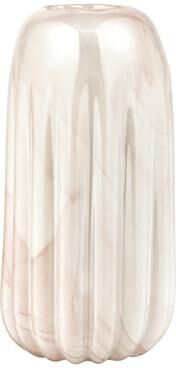
Atlas Lighting and Home Atlas Amplitude Pale Pink Marbled Glass VaseThe Amplitude large vase is made from glass and features a ridged design in a pale pink marbleized finish. This piece is ideal for subtly introducing a light, feminine color palette to a chic, modern interior.38,99 $*Shipping: 0,00 $Secure redirect to the provider
-
Universal Stock Ultrasonic Jewelry And Glasses Cleaner High Frequency Cleaning Machine Ultrasonic Jewelry And Glasses Cleaner High Frequency Cleaning MachineKeep everyday small items cleaner with this ultrasonic jewelry cleaner designed for simple household use. Highfrequency 6065 kHz vibrations create a cavitation effect that helps remove dirt and grime from small crevices and hardtoreach areas. The...139,97 $*Shipping: 0,00 $Secure redirect to the provider
-
Inspired Deals Digital Transceiver For Low Latency Drone Video Transmission Stable Signal Module Digital Transceiver For Low Latency Drone Video Transmission Stable Signal ModuleTake control of every flight with confidence and clarity. This DJI Neo 2 digital transceiver is designed for drone enthusiasts and professionals who demand smooth, realtime video transmission without frustrating delays. Whether you're capturing...64,97 $*Shipping: 0,00 $Secure redirect to the provider
-
Tools, Home & Hobby 15L Ultrasonic Cleaner With 40kHz Frequency And Digital Heater Timer 15L Ultrasonic Cleaner With 40kHz Frequency And Digital Heater TimerClean jewelry, tools, eyewear, and automotive parts with this 15L ultrasonic cleaner, designed for thorough cleaning of delicate and hardtoreach surfaces. Using 40kHz ultrasonic technology, adjustable heating, and dualpower degassing, this digital...399,97 $*Shipping: 0,00 $Secure redirect to the provider
-
What is frequency, angular frequency, peak factor, amplitude, and instantaneous value?
Frequency is the number of occurrences of a repeating event per unit of time, typically measured in hertz (Hz). Angular frequency is a measure of how quickly an object moves through a circular path, and is measured in radians per second. Peak factor is the ratio of the peak value of a waveform to its RMS (root mean square) value, and is a measure of the waveform's peakiness. Amplitude is the maximum displacement or distance moved by a point on a vibrating body or wave from its central position. Instantaneous value refers to the value of a varying quantity at a particular instant in time. **
-
What is the difference between frequency modulation and amplitude modulation?
Frequency modulation (FM) and amplitude modulation (AM) are two different methods used in radio broadcasting to carry a signal. The main difference between the two is how they vary the carrier wave to transmit information. In AM, the amplitude of the carrier wave is varied in proportion to that of the input signal, while in FM, the frequency of the carrier wave is varied. FM is known for its better sound quality and resistance to noise, while AM is simpler and has a longer range. **
-
What is the difference between amplitude modulation and frequency modulation?
Amplitude modulation (AM) is a method of encoding information on a carrier wave by varying its amplitude, while frequency modulation (FM) encodes information by varying the frequency of the carrier wave. In AM, the amplitude of the carrier wave is directly proportional to the amplitude of the input signal, whereas in FM, the frequency of the carrier wave is varied in proportion to the amplitude of the input signal. FM is less susceptible to noise and interference compared to AM, making it a more reliable method for transmitting information over long distances. **
-
What is the difference between high and low amplitude frequency?
High amplitude frequency refers to a signal with a large magnitude or strength, while low amplitude frequency refers to a signal with a smaller magnitude or strength. In terms of sound waves, high amplitude frequency would produce a louder sound, while low amplitude frequency would produce a quieter sound. In general, high amplitude frequency signals are more powerful and can carry more energy compared to low amplitude frequency signals. **
Similar search terms for HarperCollinsChildren-sBooks-Up-and
-
L'Oréal Professionnel Vitamino Color Spectrum Shampoo 300ml and RinseHair colour treatments are time consuming and can be expensive - that's why its so important to care for your hair properly, from the moment you step out the salon. Get ready to lock in vibrant Color from day one - for up to 100 days - with the Vitamino Color Spectrum Professional Shampoo 300ml and Rinse Off Hair Mask 250ml Duo by L’Oréal Professionnel.* Vitamino Color Spectrum Professional Shampoo 300ml: With a luxuriously creamy texture, this ultra-caring shampoo transforms into a dense, rich foam, deeply cleansing the hair fiber while leaving it nourished and stronger. Vitamino Rinse Off Hair Mask 250ml: The mask formula features a rich, creamy texture that spreads evenly through the hair, deeply moisturizing each strand for stronger, smoother, and healthier-looking hair. Ingredients Vitamino Color Spectrum Professional Shampoo 300ml: AQUA / WATER / EAU • SODIUM COCOYL ISETHIONATE • DISODIUM LAURETH SULFOSUCCINATE • GLYCOL DISTEARATE • SODIUM LAURYL SULFOACETATE • SODIUM LAUROYL SARCOSINATE • GLYCERIN • DECYL GLUCOSIDE • COCAMIDOPROPYL BETAINE • COCO-BETAINE • PPG-5-CETETH-20 • DIVINYLDIMETHICONE/DIMETHICONE COPOLYMER • AMODIMETHICONE • CITRIC ACID • SODIUM HYDROXIDE • POLYQUATERNIUM-7 • CARBOMER • POLYQUATERNIUM-10 • SODIUM BENZOATE • SODIUM CHLORIDE • PEG-55 PROPYLENE GLYCOL OLEATE • PROPYLENE GLYCOL • SALICYLIC ACID • BENZOIC ACID • POLYSORBATE 21 • LIMONENE • TRIDECETH-6 • GERANIOL • HEXYL CINNAMAL • CITRONELLOL • C12-13 ALKETH-23 • C12-13 ALKETH-3 • CETRIMONIUM CHLORIDE • FERULIC ACID • PHENOXYETHANOL • GLYCOLIC ACID • PARFUM / FRAGRANCE (F.I.L. N70047516/2). Vitamino Rinse Off Hair Mask 250ml: AQUA / WATER / EAU • CETEARYL ALCOHOL • BEHENTRIMONIUM CHLORIDE • GLYCERIN • ISOPROPYL MYRISTATE • CETYL ESTERS • AMODIMETHICONE • PHENOXYETHANOL • ISOPROPYL ALCOHOL • COCO-BETAINE • LIMONENE • GERANIOL • HEXYL CINNAMAL • CITRONELLOL • SODIUM CHLORIDE • CITRIC ACID • FERULIC ACID • GLYCOLIC ACID • SODIUM HYDROXIDE • PARFUM / FRAGRANCE (F.I.L. N70048177/1).46,80 £*Shipping: 0,00 £Secure redirect to the provider
-
Uplift Treasures Cute Dog Car Wiper And Turn Signal Decor Cute Dog Car Wiper And Turn Signal DecorProduct Description: Make your car stand out with this adorable dog figure decoration designed for wipers, turn signals, and car exterior styling. Perfect for adding a fun and charming touch, this cute accessory brings personality and playful vibes...31,97 $*Shipping: 0,00 $Secure redirect to the provider
-
Of Wheels Deals Trailer Tail Light With Brake And Turn Signal Trailer Tail Light With Brake And Turn SignalStay clearly visible and signal every move with confidence. This 1 pc of compact LED trailer tail light uses 20 LEDs to provide dependable brake, stop, and turn indication for 12V vehicles. Designed for trailers, trucks, caravans, and utility...41,97 $*Shipping: 0,00 $Secure redirect to the provider
-
Usborne Growing up for Boys and Girls Collection 2 Books Set, (Growing Up for Girls and Growing Up for Boys)Description. Growing up for Boys and Girls 2 Books Collection published by Usborne. This Children book cover everything boys and girls need to know to get through the up's and down's of teenage life.. Title. Growing up for Boys and Girls Collection 2 Books Set, (Growing Up for Girls and Growing Up for Boys). Delivery. Content. Reviews11,99 £*Shipping: 2,99 £Secure redirect to the provider
-
How can one explain the period, frequency, amplitude, and elongation?
The period of a wave is the time it takes for one complete cycle to occur, measured in seconds. The frequency of a wave is the number of complete cycles that occur in one second, measured in hertz. The amplitude of a wave is the maximum displacement of a wave from its equilibrium position, measured in meters. Elongation refers to the lengthening or stretching of a wave, which can occur in various types of waves such as sound waves or electromagnetic waves. These properties are fundamental to understanding the behavior and characteristics of waves in physics and can be explained using mathematical equations and physical principles. **
-
What is the relationship between amplitude, frequency, pitch, and volume?
Amplitude refers to the height of a sound wave, which determines the volume of the sound. A higher amplitude results in a louder sound. Frequency, on the other hand, refers to the number of vibrations per second and is related to the pitch of the sound. A higher frequency results in a higher pitch. Therefore, amplitude and frequency are related to volume and pitch, respectively. **
-
How can one explain signal transduction and signal transmission?
Signal transduction is the process by which a cell converts an extracellular signal into a specific cellular response. This process typically involves a series of molecular events, including the binding of a signaling molecule to a receptor on the cell surface, activation of intracellular signaling pathways, and ultimately leading to changes in gene expression, metabolism, or other cellular functions. Signal transmission, on the other hand, refers to the propagation of the signal from one cell to another, often through the release of signaling molecules such as hormones or neurotransmitters. Together, signal transduction and signal transmission allow cells to communicate with each other and coordinate their activities in response to external stimuli. **
-
How do I determine the amplitude and frequency in a physical problem?
To determine the amplitude in a physical problem, you need to identify the maximum displacement or maximum value of the quantity being analyzed. This can be found by examining the data or equations provided in the problem. The frequency, on the other hand, can be determined by looking at the rate at which the quantity oscillates or repeats itself over a given period of time. This can be calculated by dividing the number of oscillations by the time taken for those oscillations to occur. **
* All prices are inclusive of VAT and, if applicable, plus shipping costs. The offer information is based on the details provided by the respective shop and is updated through automated processes. Real-time updates do not occur, so deviations can occur in individual cases. ** Note: Parts of this content were created by AI.