Buy فرکانس.com ?
We are moving the project
فرکانس.com .
Are you interested in purchasing the domain
فرکانس.com ?
domain@kv-gmbh.de · 0541-91531010
Buy فرکانس.com ?
Why do audio files have an asymmetric amplitude spectrum?
Audio files have an asymmetric amplitude spectrum because they contain a wide range of frequencies, with some frequencies being more dominant than others. This results in a non-uniform distribution of amplitudes across the frequency spectrum, leading to an asymmetric shape. Additionally, the human auditory system is more sensitive to certain frequencies, which can also contribute to the asymmetry in the amplitude spectrum of audio files. Overall, the complex combination of different frequencies and their varying amplitudes results in an asymmetric amplitude spectrum in audio files. **
What is frequency, angular frequency, peak factor, amplitude, and instantaneous value?
Frequency is the number of occurrences of a repeating event per unit of time, typically measured in hertz (Hz). Angular frequency is a measure of how quickly an object moves through a circular path, and is measured in radians per second. Peak factor is the ratio of the peak value of a waveform to its RMS (root mean square) value, and is a measure of the waveform's peakiness. Amplitude is the maximum displacement or distance moved by a point on a vibrating body or wave from its central position. Instantaneous value refers to the value of a varying quantity at a particular instant in time. **


Similar search terms for Regatta
Top-Angebote
Products related to Regatta:
-
Zero Twist 100% Cotton Oversized Bath Sheet by BrylaneHome in Regatta BlueZero Twist 100% Cotton Oversized Bath SheetDesign:Turn your daily routine into a spa-inspired escape with this oversized zero-twist cotton bath sheet, thoughtfully designed to elevate your master bathroom decor. Imagine stepping out of a steaming...24,99 $*Shipping: 13,98 $Secure redirect to the provider
-
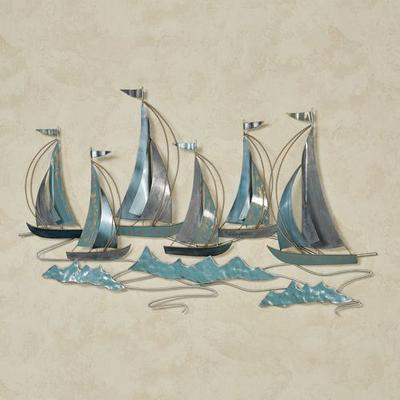
Touch of Class Afternoon Regatta Sailboat Wall Art Multi Cool , Multi CoolThe waves are churning just in time for the Afternoon Regatta! In a dimensional design, the metal wall sculpture features six sailboats racing along the sea. Handpainted and hand-finished using an alcohol ink process, aqua blue and silver hues...185,00 $*Shipping: 22,95 $Secure redirect to the provider
-
Rivolta Regatta VII Gloss Natural Semi-Hollow Electric Guitar Gloss Natural - RefurbishedThis is a Rivolta Regatta VII semi-hollow electric guitar in Gloss Natural finish. This guitar is composed of a semi-hollow body made out of Laminated Maple top and back with Mahogany sides and Mahogany centre block. A Mahogany neck is set in with a 24 fret Ebony fingerboard. Other appointments include Wilkinson Deluxe tuning machines and TOM style bridge and stopbar tailpiece. A pair of Rivolta Brevetto humbuckers are fitted and wired to a 3-way pickup selector, volume and tone. The gloss-finished Mahogany neck sports a 'Rivolta C+' neck profile that feels like a slightly deeper "C" shape and fills the hand well whilst still being incredibly comfortable. The double cutaway design gives the player unrestricted access to the upper register of the guitar. The semi-hollow body provides a wonderful amount of both sustain and resonance, providing a really authentic vintage feel that is in line with the guitar's timeless aesthetic. Amplified, the pair of Rivolta Brevetto humbuckers work in conjunction with the semi-hollow construction to deliver the full and thick sounds. The guitar resonates beautifully, filling out the sound with a deep and rich character. The neck pickup is warm and round, and can handle plenty of gain meaning you can achieve anything from jazzy lines through to soaring rock and blues solo tones. The bridge pickup is hotter, driving the front end of an amp with ease and producing the bright, biting tones that cut right through the mix to put your playing front and centre. Luthier Report Our ID: 1030826228790 Weight: 7.15lbs Serial: VA2004433 Aesthetic Condition: Headstock: Overall very good condition. All aspects of the headstock demonstrate very light scratching, only visible under direct light at certain angles. An indetation is apparent to the rear face edge of the very tip, marking but not removing any of the finish. Neck: Overall excellent condition. Any markings to the neck and fingerboard are difficult to discern. Body: Overall very good condition. All aspects of the body demonstrate very light scratching, only visible under direct light at certain angles. Any other markings to the body are difficult to discern. Condition of Frets: The frets demonstrate light signs of use, not affecting playability. There is considerable material remaining for any fret work the new owner may wish to perform. Current Set Up: Truss Rod: Fully functional. Truss rod tool (4mm hex) not included. Hardware: Fully functional and very good condition. Light scratching and tarnishing is apparent to the bridge, tailpiece, tuners and pickup covers. Light concentrated scratching is apparent to the pickguard. Structural: No concerns or issues to note. Height of the string from the 12th Fret-1.5mm - Bass 2mm Please be aware that the action on a guitar may move slightly in transit and this measurement is the current height. Strings on Guitar - 10-46 Electrics: Fully functional. Case & Accessories Rivolta Soft Case Fully functional and very good condition. All...740,00 £*Shipping: 0,00 £Secure redirect to the provider



-
What is the frequency of amplitude modulation in biology?
In biology, amplitude modulation refers to the variation in the amplitude of a signal, such as a sound wave or neural signal. This modulation can occur at various frequencies depending on the specific biological process or system being studied. For example, in the auditory system, amplitude modulation frequencies are important for encoding information about sound intensity. In neural signaling, amplitude modulation frequencies can be used to convey information about the strength or intensity of a signal being transmitted. **
-
What is the difference between frequency modulation and amplitude modulation?
Frequency modulation (FM) and amplitude modulation (AM) are two different methods used in radio broadcasting to carry a signal. The main difference between the two is how they vary the carrier wave to transmit information. In AM, the amplitude of the carrier wave is varied in proportion to that of the input signal, while in FM, the frequency of the carrier wave is varied. FM is known for its better sound quality and resistance to noise, while AM is simpler and has a longer range. **
-
What is the difference between amplitude modulation and frequency modulation?
Amplitude modulation (AM) is a method of encoding information on a carrier wave by varying its amplitude, while frequency modulation (FM) encodes information by varying the frequency of the carrier wave. In AM, the amplitude of the carrier wave is directly proportional to the amplitude of the input signal, whereas in FM, the frequency of the carrier wave is varied in proportion to the amplitude of the input signal. FM is less susceptible to noise and interference compared to AM, making it a more reliable method for transmitting information over long distances. **
-
What is the difference between high and low amplitude frequency?
High amplitude frequency refers to a signal with a large magnitude or strength, while low amplitude frequency refers to a signal with a smaller magnitude or strength. In terms of sound waves, high amplitude frequency would produce a louder sound, while low amplitude frequency would produce a quieter sound. In general, high amplitude frequency signals are more powerful and can carry more energy compared to low amplitude frequency signals. **


How can one explain the period, frequency, amplitude, and elongation?
The period of a wave is the time it takes for one complete cycle to occur, measured in seconds. The frequency of a wave is the number of complete cycles that occur in one second, measured in hertz. The amplitude of a wave is the maximum displacement of a wave from its equilibrium position, measured in meters. Elongation refers to the lengthening or stretching of a wave, which can occur in various types of waves such as sound waves or electromagnetic waves. These properties are fundamental to understanding the behavior and characteristics of waves in physics and can be explained using mathematical equations and physical principles. **
What is the relationship between amplitude, frequency, pitch, and volume?
Amplitude refers to the height of a sound wave, which determines the volume of the sound. A higher amplitude results in a louder sound. Frequency, on the other hand, refers to the number of vibrations per second and is related to the pitch of the sound. A higher frequency results in a higher pitch. Therefore, amplitude and frequency are related to volume and pitch, respectively. **
Top-Angebote
Products related to Regatta:
-
T.i./New Metal Design Regatta Sailboat Wall Sculpture Blue , BlueBalmy breezes carry the sailboats across the water in the annual Regatta. The handcrafted metal wall sculpture, by artist Joanne Ferrara, features three striped sailboats gliding on the ocean. The hand-finished boats have shades of coastal blue,...129,99 $*Shipping: 0,00 $Secure redirect to the provider
-
T.i./New Metal Design Sailboat Regatta Wall Art Silver/Blue , Silver/BlueSeafaring hearts love the sight of a Sailboat Regatta. Designed by artist Joanne Ferrara, the handcrafted metal and stainless steel wall sculpture features five sailboats with striped sails upon the open sea. Hand-grinded texture and hand-dyed...119,99 $*Shipping: 0,00 $Secure redirect to the provider
-
Zero Twist 100% Cotton Oversized Bath Sheet by BrylaneHome in Regatta BlueZero Twist 100% Cotton Oversized Bath SheetDesign:Turn your daily routine into a spa-inspired escape with this oversized zero-twist cotton bath sheet, thoughtfully designed to elevate your master bathroom decor. Imagine stepping out of a steaming...24,99 $*Shipping: 13,98 $Secure redirect to the provider
-
Touch of Class Afternoon Regatta Sailboat Wall Art Multi Cool , Multi CoolThe waves are churning just in time for the Afternoon Regatta! In a dimensional design, the metal wall sculpture features six sailboats racing along the sea. Handpainted and hand-finished using an alcohol ink process, aqua blue and silver hues...185,00 $*Shipping: 22,95 $Secure redirect to the provider
-
Why do audio files have an asymmetric amplitude spectrum?
Audio files have an asymmetric amplitude spectrum because they contain a wide range of frequencies, with some frequencies being more dominant than others. This results in a non-uniform distribution of amplitudes across the frequency spectrum, leading to an asymmetric shape. Additionally, the human auditory system is more sensitive to certain frequencies, which can also contribute to the asymmetry in the amplitude spectrum of audio files. Overall, the complex combination of different frequencies and their varying amplitudes results in an asymmetric amplitude spectrum in audio files. **
-
What is frequency, angular frequency, peak factor, amplitude, and instantaneous value?
Frequency is the number of occurrences of a repeating event per unit of time, typically measured in hertz (Hz). Angular frequency is a measure of how quickly an object moves through a circular path, and is measured in radians per second. Peak factor is the ratio of the peak value of a waveform to its RMS (root mean square) value, and is a measure of the waveform's peakiness. Amplitude is the maximum displacement or distance moved by a point on a vibrating body or wave from its central position. Instantaneous value refers to the value of a varying quantity at a particular instant in time. **
-
What is the frequency of amplitude modulation in biology?
In biology, amplitude modulation refers to the variation in the amplitude of a signal, such as a sound wave or neural signal. This modulation can occur at various frequencies depending on the specific biological process or system being studied. For example, in the auditory system, amplitude modulation frequencies are important for encoding information about sound intensity. In neural signaling, amplitude modulation frequencies can be used to convey information about the strength or intensity of a signal being transmitted. **
-
What is the difference between frequency modulation and amplitude modulation?
Frequency modulation (FM) and amplitude modulation (AM) are two different methods used in radio broadcasting to carry a signal. The main difference between the two is how they vary the carrier wave to transmit information. In AM, the amplitude of the carrier wave is varied in proportion to that of the input signal, while in FM, the frequency of the carrier wave is varied. FM is known for its better sound quality and resistance to noise, while AM is simpler and has a longer range. **
Similar search terms for Regatta
-
Rivolta Regatta VII Gloss Natural Semi-Hollow Electric Guitar Gloss Natural - RefurbishedThis is a Rivolta Regatta VII semi-hollow electric guitar in Gloss Natural finish. This guitar is composed of a semi-hollow body made out of Laminated Maple top and back with Mahogany sides and Mahogany centre block. A Mahogany neck is set in with a 24 fret Ebony fingerboard. Other appointments include Wilkinson Deluxe tuning machines and TOM style bridge and stopbar tailpiece. A pair of Rivolta Brevetto humbuckers are fitted and wired to a 3-way pickup selector, volume and tone. The gloss-finished Mahogany neck sports a 'Rivolta C+' neck profile that feels like a slightly deeper "C" shape and fills the hand well whilst still being incredibly comfortable. The double cutaway design gives the player unrestricted access to the upper register of the guitar. The semi-hollow body provides a wonderful amount of both sustain and resonance, providing a really authentic vintage feel that is in line with the guitar's timeless aesthetic. Amplified, the pair of Rivolta Brevetto humbuckers work in conjunction with the semi-hollow construction to deliver the full and thick sounds. The guitar resonates beautifully, filling out the sound with a deep and rich character. The neck pickup is warm and round, and can handle plenty of gain meaning you can achieve anything from jazzy lines through to soaring rock and blues solo tones. The bridge pickup is hotter, driving the front end of an amp with ease and producing the bright, biting tones that cut right through the mix to put your playing front and centre. Luthier Report Our ID: 1030826228790 Weight: 7.15lbs Serial: VA2004433 Aesthetic Condition: Headstock: Overall very good condition. All aspects of the headstock demonstrate very light scratching, only visible under direct light at certain angles. An indetation is apparent to the rear face edge of the very tip, marking but not removing any of the finish. Neck: Overall excellent condition. Any markings to the neck and fingerboard are difficult to discern. Body: Overall very good condition. All aspects of the body demonstrate very light scratching, only visible under direct light at certain angles. Any other markings to the body are difficult to discern. Condition of Frets: The frets demonstrate light signs of use, not affecting playability. There is considerable material remaining for any fret work the new owner may wish to perform. Current Set Up: Truss Rod: Fully functional. Truss rod tool (4mm hex) not included. Hardware: Fully functional and very good condition. Light scratching and tarnishing is apparent to the bridge, tailpiece, tuners and pickup covers. Light concentrated scratching is apparent to the pickguard. Structural: No concerns or issues to note. Height of the string from the 12th Fret-1.5mm - Bass 2mm Please be aware that the action on a guitar may move slightly in transit and this measurement is the current height. Strings on Guitar - 10-46 Electrics: Fully functional. Case & Accessories Rivolta Soft Case Fully functional and very good condition. All...740,00 £*Shipping: 0,00 £Secure redirect to the provider
-
What is the difference between amplitude modulation and frequency modulation?
Amplitude modulation (AM) is a method of encoding information on a carrier wave by varying its amplitude, while frequency modulation (FM) encodes information by varying the frequency of the carrier wave. In AM, the amplitude of the carrier wave is directly proportional to the amplitude of the input signal, whereas in FM, the frequency of the carrier wave is varied in proportion to the amplitude of the input signal. FM is less susceptible to noise and interference compared to AM, making it a more reliable method for transmitting information over long distances. **
-
What is the difference between high and low amplitude frequency?
High amplitude frequency refers to a signal with a large magnitude or strength, while low amplitude frequency refers to a signal with a smaller magnitude or strength. In terms of sound waves, high amplitude frequency would produce a louder sound, while low amplitude frequency would produce a quieter sound. In general, high amplitude frequency signals are more powerful and can carry more energy compared to low amplitude frequency signals. **
-
How can one explain the period, frequency, amplitude, and elongation?
The period of a wave is the time it takes for one complete cycle to occur, measured in seconds. The frequency of a wave is the number of complete cycles that occur in one second, measured in hertz. The amplitude of a wave is the maximum displacement of a wave from its equilibrium position, measured in meters. Elongation refers to the lengthening or stretching of a wave, which can occur in various types of waves such as sound waves or electromagnetic waves. These properties are fundamental to understanding the behavior and characteristics of waves in physics and can be explained using mathematical equations and physical principles. **
-
What is the relationship between amplitude, frequency, pitch, and volume?
Amplitude refers to the height of a sound wave, which determines the volume of the sound. A higher amplitude results in a louder sound. Frequency, on the other hand, refers to the number of vibrations per second and is related to the pitch of the sound. A higher frequency results in a higher pitch. Therefore, amplitude and frequency are related to volume and pitch, respectively. **
* All prices are inclusive of VAT and, if applicable, plus shipping costs. The offer information is based on the details provided by the respective shop and is updated through automated processes. Real-time updates do not occur, so deviations can occur in individual cases. ** Note: Parts of this content were created by AI.