Buy فرکانس.com ?
We are moving the project
فرکانس.com .
Are you interested in purchasing the domain
فرکانس.com ?
domain@kv-gmbh.de · 0541-91531010
Buy فرکانس.com ?
What is the concept of a wave in physics?
In physics, a wave is a disturbance that travels through a medium, transferring energy from one point to another without transferring matter. Waves can be characterized by their amplitude, wavelength, frequency, and speed. They can take various forms, such as sound waves, light waves, and water waves. The study of waves is important in understanding many natural phenomena and technological applications, from the behavior of sound and light to the transmission of information through telecommunications. **
How does the sea snake concept work for harnessing wave energy?
The sea snake concept for harnessing wave energy involves a long, flexible structure that moves with the motion of the waves. As the waves pass by, the sea snake bends and flexes, converting the kinetic energy of the waves into mechanical energy. This mechanical energy can then be used to drive a generator and produce electricity. The sea snake's design allows it to capture energy from a wide range of wave conditions, making it a versatile and efficient way to harness wave power. **


Similar search terms for Heim-Concept-Hammered-Wave
Top-Angebote
Products related to Heim-Concept-Hammered-Wave:
-
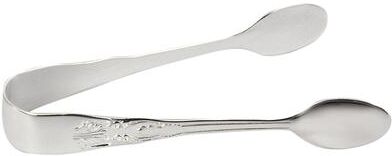
Elegance Heim Concept Sugar TongsThese tongs are constructed with stainless steel and features a beautiful silver-plated finish.Serve afternoon tea with this sugar tongs by Heim Concept Silver to match the Heim Concept of the tradition of serving tea.22,41 $*Shipping: 0,00 $Secure redirect to the provider

-
Which to choose: body wave, permanent wave, etc.?
The choice between a body wave and a permanent wave depends on your desired outcome. A body wave creates loose, natural-looking waves that add volume and texture to the hair, while a permanent wave creates tighter, more defined curls or waves that last longer. Consider your hair type, desired style, and maintenance routine when deciding between the two options. It's best to consult with a professional stylist to determine which type of wave will best suit your needs and preferences. **
-
Is a transverse wave also a longitudinal wave?
No, a transverse wave is not the same as a longitudinal wave. Transverse waves have oscillations perpendicular to the direction of wave propagation, while longitudinal waves have oscillations parallel to the direction of wave propagation. This means that the particles in a transverse wave move up and down or side to side, while the particles in a longitudinal wave move back and forth in the same direction as the wave. **
-
Did he wave or did he wave back?
He waved back. **
-
'Wave or cockatiel?'
It ultimately depends on your personal preferences and lifestyle. Waves are known for their intelligence and ability to mimic sounds, while cockatiels are known for their friendly and affectionate nature. Consider factors such as space, time commitment, and noise level when deciding between the two. Both make wonderful pets, so choose the one that best fits your needs and interests. **

'The Wave Cast'
"The Wave Cast" is a term used to describe the group of actors and actresses who starred in the 1981 TV movie "The Wave," which was based on the true story of a high school teacher's social experiment gone wrong. The cast included Bruce Davison, Lori Lethin, and John Putch, among others. The film explores the dangers of groupthink and the power of authority, and the cast's performances effectively conveyed the chilling transformation of the students as they become increasingly influenced by the teacher's experiment. **
How do you calculate the frequency of a wave?
The frequency of a wave is calculated by counting the number of complete wave cycles that pass a fixed point in a given amount of time. It is typically measured in hertz (Hz), which represents the number of cycles per second. To calculate the frequency, you can divide the number of wave cycles by the time it took for those cycles to pass. Mathematically, the formula for frequency is: frequency = number of cycles / time. **
Top-Angebote
Products related to Heim-Concept-Hammered-Wave:
-
Elegance "Heim Concept 10"" Bolt Hammered Stainless Steel Triangular Bowl"A Bolt Hammered Triangular Bowl, with its stainless steel construction and unusual design, is a durable and eye-catching piece of kitchenware. The bolt-hammered surface of this serving bowl is pitted in some areas and raised in others.50,39 $*Shipping: 0,00 $Secure redirect to the provider
-
Elegance Heim Concept Sugar TongsThese tongs are constructed with stainless steel and features a beautiful silver-plated finish.Serve afternoon tea with this sugar tongs by Heim Concept Silver to match the Heim Concept of the tradition of serving tea.22,41 $*Shipping: 0,00 $Secure redirect to the provider
-
What is the concept of a wave in physics?
In physics, a wave is a disturbance that travels through a medium, transferring energy from one point to another without transferring matter. Waves can be characterized by their amplitude, wavelength, frequency, and speed. They can take various forms, such as sound waves, light waves, and water waves. The study of waves is important in understanding many natural phenomena and technological applications, from the behavior of sound and light to the transmission of information through telecommunications. **
-
How does the sea snake concept work for harnessing wave energy?
The sea snake concept for harnessing wave energy involves a long, flexible structure that moves with the motion of the waves. As the waves pass by, the sea snake bends and flexes, converting the kinetic energy of the waves into mechanical energy. This mechanical energy can then be used to drive a generator and produce electricity. The sea snake's design allows it to capture energy from a wide range of wave conditions, making it a versatile and efficient way to harness wave power. **
-
Which to choose: body wave, permanent wave, etc.?
The choice between a body wave and a permanent wave depends on your desired outcome. A body wave creates loose, natural-looking waves that add volume and texture to the hair, while a permanent wave creates tighter, more defined curls or waves that last longer. Consider your hair type, desired style, and maintenance routine when deciding between the two options. It's best to consult with a professional stylist to determine which type of wave will best suit your needs and preferences. **
-
Is a transverse wave also a longitudinal wave?
No, a transverse wave is not the same as a longitudinal wave. Transverse waves have oscillations perpendicular to the direction of wave propagation, while longitudinal waves have oscillations parallel to the direction of wave propagation. This means that the particles in a transverse wave move up and down or side to side, while the particles in a longitudinal wave move back and forth in the same direction as the wave. **
Similar search terms for Heim-Concept-Hammered-Wave
-
Did he wave or did he wave back?
He waved back. **
-
'Wave or cockatiel?'
It ultimately depends on your personal preferences and lifestyle. Waves are known for their intelligence and ability to mimic sounds, while cockatiels are known for their friendly and affectionate nature. Consider factors such as space, time commitment, and noise level when deciding between the two. Both make wonderful pets, so choose the one that best fits your needs and interests. **
-
'The Wave Cast'
"The Wave Cast" is a term used to describe the group of actors and actresses who starred in the 1981 TV movie "The Wave," which was based on the true story of a high school teacher's social experiment gone wrong. The cast included Bruce Davison, Lori Lethin, and John Putch, among others. The film explores the dangers of groupthink and the power of authority, and the cast's performances effectively conveyed the chilling transformation of the students as they become increasingly influenced by the teacher's experiment. **
-
How do you calculate the frequency of a wave?
The frequency of a wave is calculated by counting the number of complete wave cycles that pass a fixed point in a given amount of time. It is typically measured in hertz (Hz), which represents the number of cycles per second. To calculate the frequency, you can divide the number of wave cycles by the time it took for those cycles to pass. Mathematically, the formula for frequency is: frequency = number of cycles / time. **
* All prices are inclusive of VAT and, if applicable, plus shipping costs. The offer information is based on the details provided by the respective shop and is updated through automated processes. Real-time updates do not occur, so deviations can occur in individual cases. ** Note: Parts of this content were created by AI.