Buy فرکانس.com ?
We are moving the project
فرکانس.com .
Are you interested in purchasing the domain
فرکانس.com ?
domain@kv-gmbh.de · 0541-91531010
Buy فرکانس.com ?
Why do audio files have an asymmetric amplitude spectrum?
Audio files have an asymmetric amplitude spectrum because they contain a wide range of frequencies, with some frequencies being more dominant than others. This results in a non-uniform distribution of amplitudes across the frequency spectrum, leading to an asymmetric shape. Additionally, the human auditory system is more sensitive to certain frequencies, which can also contribute to the asymmetry in the amplitude spectrum of audio files. Overall, the complex combination of different frequencies and their varying amplitudes results in an asymmetric amplitude spectrum in audio files. **
How do you solve this task? Assuming the frequency of the wave is now 50 Hz and the amplitude is 13 cm. Calculate the distance the marked point travels in 30 seconds.
To solve this task, we first need to calculate the wavelength of the wave using the formula: wavelength = speed of wave / frequency. Given that the speed of the wave is 350 cm/s (as per the previous information provided), we can calculate the wavelength. Once we have the wavelength, we can determine the distance the marked point travels in 30 seconds by multiplying the wavelength by the number of complete waves the point travels in that time period. **


Similar search terms for Point
Top-Angebote
Products related to Point:
-
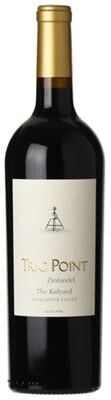
"""Trig Point""" """Trig Point Railyard Vineyard Zinfandel 2021 Red Wine - California""""""Aromas of plum, ripe black cherries, gravel and gun flint graced with spice notes. Layered black fruits and a well balanced fullness through the palate. Supple tannins integrate seamlessly with mineral notes and a long finish. Blend: 95% Zinfandel,..."20,99 $*Shipping: 0,00 $Secure redirect to the provider
-
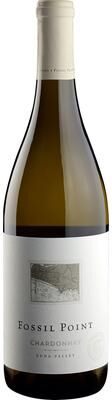
"""Fossil Point""" """Fossil Point Edna Valley Chardonnay 2023 White Wine - California""""""This vintage shows classic citrus notes of tangerine balanced by a creamy palate feel resulting from aging on lees. Delicious on its own, but their Chardonnay shines at the table. Pair with sweet poached shrimp, seared scallops, or line-caught..."21,99 $*Shipping: 0,00 $Secure redirect to the provider
-
"""Trig Point""" """Trig Point Railyard Vineyard Zinfandel 2023 Red Wine - California""""""A deep, dark purple color, with aromas of fresh blackberries and raspberries and a hint of cedar. The palate has a bracing texture characterized by fine-grained tannins and bright acidity. Flavors include cedar spice, blackberries, and plum. This..."28,99 $*Shipping: 0,00 $Secure redirect to the provider
-
"""Trig Point""" """Trig Point Diamond Dust Vineyard Merlot 2023 Red Wine - California""""""Dark purple hue. Floral aromas complemented by red berries. A supple, vibrant and polished palate with seamless integration of fruit and tannin. Long finish with tannins that gracefully fade. This bright and juicy Merlot gives big, round aromas of..."27,99 $*Shipping: 0,00 $Secure redirect to the provider


-
What is frequency, angular frequency, peak factor, amplitude, and instantaneous value?
Frequency is the number of occurrences of a repeating event per unit of time, typically measured in hertz (Hz). Angular frequency is a measure of how quickly an object moves through a circular path, and is measured in radians per second. Peak factor is the ratio of the peak value of a waveform to its RMS (root mean square) value, and is a measure of the waveform's peakiness. Amplitude is the maximum displacement or distance moved by a point on a vibrating body or wave from its central position. Instantaneous value refers to the value of a varying quantity at a particular instant in time. **
-
What is the frequency of amplitude modulation in biology?
In biology, amplitude modulation refers to the variation in the amplitude of a signal, such as a sound wave or neural signal. This modulation can occur at various frequencies depending on the specific biological process or system being studied. For example, in the auditory system, amplitude modulation frequencies are important for encoding information about sound intensity. In neural signaling, amplitude modulation frequencies can be used to convey information about the strength or intensity of a signal being transmitted. **
-
What is the difference between frequency modulation and amplitude modulation?
Frequency modulation (FM) and amplitude modulation (AM) are two different methods used in radio broadcasting to carry a signal. The main difference between the two is how they vary the carrier wave to transmit information. In AM, the amplitude of the carrier wave is varied in proportion to that of the input signal, while in FM, the frequency of the carrier wave is varied. FM is known for its better sound quality and resistance to noise, while AM is simpler and has a longer range. **
-
What is the difference between amplitude modulation and frequency modulation?
Amplitude modulation (AM) is a method of encoding information on a carrier wave by varying its amplitude, while frequency modulation (FM) encodes information by varying the frequency of the carrier wave. In AM, the amplitude of the carrier wave is directly proportional to the amplitude of the input signal, whereas in FM, the frequency of the carrier wave is varied in proportion to the amplitude of the input signal. FM is less susceptible to noise and interference compared to AM, making it a more reliable method for transmitting information over long distances. **


What is the difference between high and low amplitude frequency?
High amplitude frequency refers to a signal with a large magnitude or strength, while low amplitude frequency refers to a signal with a smaller magnitude or strength. In terms of sound waves, high amplitude frequency would produce a louder sound, while low amplitude frequency would produce a quieter sound. In general, high amplitude frequency signals are more powerful and can carry more energy compared to low amplitude frequency signals. **
How can one explain the period, frequency, amplitude, and elongation?
The period of a wave is the time it takes for one complete cycle to occur, measured in seconds. The frequency of a wave is the number of complete cycles that occur in one second, measured in hertz. The amplitude of a wave is the maximum displacement of a wave from its equilibrium position, measured in meters. Elongation refers to the lengthening or stretching of a wave, which can occur in various types of waves such as sound waves or electromagnetic waves. These properties are fundamental to understanding the behavior and characteristics of waves in physics and can be explained using mathematical equations and physical principles. **
Top-Angebote
Products related to Point:
-
"""Trig Point""" """Trig Point Signpost Chardonnay 2022 White Wine - California""""""romas of Meyer lemon and honeydew. Vibrant and juicy stone fruit flavors. Flint and mineral leaving the mouth crying out for more. Crisp and refreshing with a medium-weight mid-palate and just a touch of oak in the finish. Great tension and vibrancy."""26,99 $*Shipping: 0,00 $Secure redirect to the provider
-
What's the Point of Philosophy? (DK What's the Point of?)Travel down the road of wisdom to discover how to think about a series of philosophical problems, how to defend your opinions on them, and how to evaluate the opinions of others. Why is philosophy important? What's so great about it? Take a leap into the world of philosophy and discover questions about life, the universe, and human behaviour that great thinkers have pondered throughout history, and which are still being asked today. Philosophical ideas affect our day-to-day lives in ways that you might not expect. But understanding these ideas can be daunting - even for adults! If you want to learn how to argue the case for animal rights, why the concept of equality has many sides, or even what the theories are about why humans exist at all, What's the Point of Philosophy? is the perfect place to start. Put your thinking cap on and get ready to explore:- A variety of fascinating topics reveal pivotal questions in philosophy that are still discussed today. - Timeline spreads illustrate major schools of thought, and the women and men who developed them. - Clear, accessible text makes the book appealing for readers of all ages. - Uncoated paper gives a vintage feel to the book which perfectly complements the illustrator's style. This fascinating philosophy book is a unique way to get kids to begin thinking critically about the world around them, and showcases the many ways in which philosophy has changed the world, one crazy idea at a time, and it is guaranteed to inspire, surprise, amuse, and entertain everybody who picks it up. By slowly unraveling arguments to unpack complex theories, What's the Point of Philosophy? allows you to connect with ideas in a new and exciting way. If you never stop asking 'why?', this is the book for you9,99 £*Shipping: 2,99 £Secure redirect to the provider
-
"""Trig Point""" """Trig Point Railyard Vineyard Zinfandel 2021 Red Wine - California""""""Aromas of plum, ripe black cherries, gravel and gun flint graced with spice notes. Layered black fruits and a well balanced fullness through the palate. Supple tannins integrate seamlessly with mineral notes and a long finish. Blend: 95% Zinfandel,..."20,99 $*Shipping: 0,00 $Secure redirect to the provider
-
"""Fossil Point""" """Fossil Point Edna Valley Chardonnay 2023 White Wine - California""""""This vintage shows classic citrus notes of tangerine balanced by a creamy palate feel resulting from aging on lees. Delicious on its own, but their Chardonnay shines at the table. Pair with sweet poached shrimp, seared scallops, or line-caught..."21,99 $*Shipping: 0,00 $Secure redirect to the provider
-
Why do audio files have an asymmetric amplitude spectrum?
Audio files have an asymmetric amplitude spectrum because they contain a wide range of frequencies, with some frequencies being more dominant than others. This results in a non-uniform distribution of amplitudes across the frequency spectrum, leading to an asymmetric shape. Additionally, the human auditory system is more sensitive to certain frequencies, which can also contribute to the asymmetry in the amplitude spectrum of audio files. Overall, the complex combination of different frequencies and their varying amplitudes results in an asymmetric amplitude spectrum in audio files. **
-
How do you solve this task? Assuming the frequency of the wave is now 50 Hz and the amplitude is 13 cm. Calculate the distance the marked point travels in 30 seconds.
To solve this task, we first need to calculate the wavelength of the wave using the formula: wavelength = speed of wave / frequency. Given that the speed of the wave is 350 cm/s (as per the previous information provided), we can calculate the wavelength. Once we have the wavelength, we can determine the distance the marked point travels in 30 seconds by multiplying the wavelength by the number of complete waves the point travels in that time period. **
-
What is frequency, angular frequency, peak factor, amplitude, and instantaneous value?
Frequency is the number of occurrences of a repeating event per unit of time, typically measured in hertz (Hz). Angular frequency is a measure of how quickly an object moves through a circular path, and is measured in radians per second. Peak factor is the ratio of the peak value of a waveform to its RMS (root mean square) value, and is a measure of the waveform's peakiness. Amplitude is the maximum displacement or distance moved by a point on a vibrating body or wave from its central position. Instantaneous value refers to the value of a varying quantity at a particular instant in time. **
-
What is the frequency of amplitude modulation in biology?
In biology, amplitude modulation refers to the variation in the amplitude of a signal, such as a sound wave or neural signal. This modulation can occur at various frequencies depending on the specific biological process or system being studied. For example, in the auditory system, amplitude modulation frequencies are important for encoding information about sound intensity. In neural signaling, amplitude modulation frequencies can be used to convey information about the strength or intensity of a signal being transmitted. **
Similar search terms for Point
-
"""Trig Point""" """Trig Point Railyard Vineyard Zinfandel 2023 Red Wine - California""""""A deep, dark purple color, with aromas of fresh blackberries and raspberries and a hint of cedar. The palate has a bracing texture characterized by fine-grained tannins and bright acidity. Flavors include cedar spice, blackberries, and plum. This..."28,99 $*Shipping: 0,00 $Secure redirect to the provider
-
"""Trig Point""" """Trig Point Diamond Dust Vineyard Merlot 2023 Red Wine - California""""""Dark purple hue. Floral aromas complemented by red berries. A supple, vibrant and polished palate with seamless integration of fruit and tannin. Long finish with tannins that gracefully fade. This bright and juicy Merlot gives big, round aromas of..."27,99 $*Shipping: 0,00 $Secure redirect to the provider
-
"""Dog Point Vineyard""" """Dog Point Vineyard Chardonnay 2022 White Wine - New Zealand""""""Several influential voices in the wine industry believe that in time Chardonnay may prove New Zealand's single highest achievement. All three of the Dog Point wines fermented in barrel are small in production, but the Chardonnay is the smallest,..."42,99 $*Shipping: 0,00 $Secure redirect to the provider
-
Edge of Me : Breaking Point That Becomes Becoming Point by Cormac ValeDescription. Title:. Edge of Me : The Breaking Point That Becomes the Becoming Point. Condition:BRAND NEW. Format:Paperback. ISBN: 9789370035188. Edge of Me : The Breaking Point That Becomes the Becoming Point by Cormac Vale. Ever felt like you’re on the edge of something— but you’re not sure what? Edge of Me captures the raw, restless in-between. Not quite broken, not quite blooming. A space of endings, beginnings, and that breathless place where everything could change. This is for the version of you that’s unraveling and rebuilding in the same season. The parts that are jagged, electric, unsure—but still showing up. You’ll find language for the liminal, softness for the sharp edges, and maybe even the courage to jump. The edge isn’t the end. It’s the threshold. You’re closer than you think.. About the Author:. Cormac Vale is an Irish writer, lecturer in literature, and author of non-fiction, notably the book Edge of Me: The Breaking Point That Becomes the Becoming Point.. Background: He is an Irish writer and lecturer who was educated at Trinity College Dublin.. Literary Style: His work often explores themes of identity, resilience, and the human condition, frequently blending literary analysis with reflections on personal experience.. Title. Edge of Me : Breaking Point That Becomes Becoming Point. Delivery. Content. Reviews2,99 £*Shipping: 2,99 £Secure redirect to the provider
-
What is the difference between frequency modulation and amplitude modulation?
Frequency modulation (FM) and amplitude modulation (AM) are two different methods used in radio broadcasting to carry a signal. The main difference between the two is how they vary the carrier wave to transmit information. In AM, the amplitude of the carrier wave is varied in proportion to that of the input signal, while in FM, the frequency of the carrier wave is varied. FM is known for its better sound quality and resistance to noise, while AM is simpler and has a longer range. **
-
What is the difference between amplitude modulation and frequency modulation?
Amplitude modulation (AM) is a method of encoding information on a carrier wave by varying its amplitude, while frequency modulation (FM) encodes information by varying the frequency of the carrier wave. In AM, the amplitude of the carrier wave is directly proportional to the amplitude of the input signal, whereas in FM, the frequency of the carrier wave is varied in proportion to the amplitude of the input signal. FM is less susceptible to noise and interference compared to AM, making it a more reliable method for transmitting information over long distances. **
-
What is the difference between high and low amplitude frequency?
High amplitude frequency refers to a signal with a large magnitude or strength, while low amplitude frequency refers to a signal with a smaller magnitude or strength. In terms of sound waves, high amplitude frequency would produce a louder sound, while low amplitude frequency would produce a quieter sound. In general, high amplitude frequency signals are more powerful and can carry more energy compared to low amplitude frequency signals. **
-
How can one explain the period, frequency, amplitude, and elongation?
The period of a wave is the time it takes for one complete cycle to occur, measured in seconds. The frequency of a wave is the number of complete cycles that occur in one second, measured in hertz. The amplitude of a wave is the maximum displacement of a wave from its equilibrium position, measured in meters. Elongation refers to the lengthening or stretching of a wave, which can occur in various types of waves such as sound waves or electromagnetic waves. These properties are fundamental to understanding the behavior and characteristics of waves in physics and can be explained using mathematical equations and physical principles. **
* All prices are inclusive of VAT and, if applicable, plus shipping costs. The offer information is based on the details provided by the respective shop and is updated through automated processes. Real-time updates do not occur, so deviations can occur in individual cases. ** Note: Parts of this content were created by AI.