Buy فرکانس.com ?
We are moving the project
فرکانس.com .
Are you interested in purchasing the domain
فرکانس.com ?
domain@kv-gmbh.de · 0541-91531010
Buy فرکانس.com ?
Can the employer read my Signal messages?
No, the employer cannot read your Signal messages unless they have access to your device and are able to bypass the security measures on your phone. Signal is an end-to-end encrypted messaging app, which means that only the sender and the recipient can read the messages. This level of encryption ensures that even the service provider (in this case, Signal) cannot access the content of the messages. Therefore, your employer would not be able to read your Signal messages without your permission. **
Why do audio files have an asymmetric amplitude spectrum?
Audio files have an asymmetric amplitude spectrum because they contain a wide range of frequencies, with some frequencies being more dominant than others. This results in a non-uniform distribution of amplitudes across the frequency spectrum, leading to an asymmetric shape. Additionally, the human auditory system is more sensitive to certain frequencies, which can also contribute to the asymmetry in the amplitude spectrum of audio files. Overall, the complex combination of different frequencies and their varying amplitudes results in an asymmetric amplitude spectrum in audio files. **

Similar search terms for Read
Top-Angebote
Products related to Read:
-
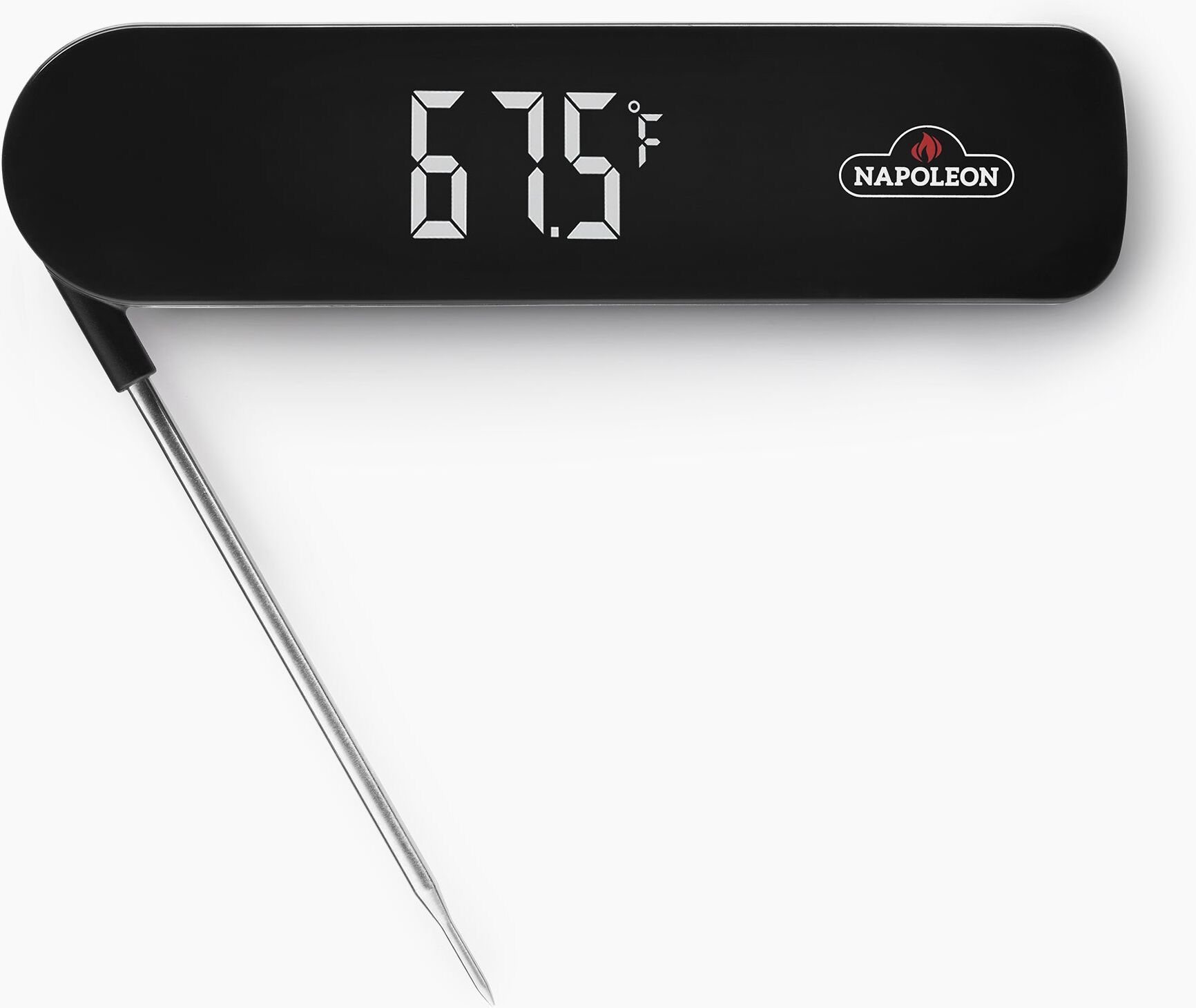
KitchenAid Digital Read Instant ThermometerInstantly read the internal temperature of foods with the KitchenAid Digital Instant Read Thermometer. This feature-packed digital thermometer includes a backlit LCD readout that displays the temperature boldly and clearly. Temperature readings are obtained in less than 6 seconds, while a unique 'hold' feature locks in the last recorded temperature, displaying it on screen after the thermometer is removed from the food. The ultra-thin tip is supplied with handy pocket/storage sleeve to protect the probe during storage. A conversion button swaps between Celsius and Fahrenheit readings with a range of -40 to +250°C (-40 to +482°F). Clean by wiping with a damp cloth and then drying thoroughly. Requires 1x CR2032 (3V) battery (not included). The KitchenAid Digital Instant Read Thermometer is supplied with a 1 year manufacturer's warranty.25,59 £*Shipping: 3,50 £Secure redirect to the provider
-
Must-Read Biographies: Arts & SportsFrida Kahlo, Lin Manuel Miranda, Billie Jean King, Shohei Ohtani... These are just some of the outstanding artists and sports figures whose life stories are sure to captivate students. Engaging short texts detail their diverse backgrounds, the...26,99 $*Shipping: 0,00 $Secure redirect to the provider
-
Must-Read Biographies: Change MakersGreta Thunberg, Sitting Bull, Sojourner Truth, Barack Obama... Students will be fascinated by these people's stories, as well as those of the other notable figures in this set. Engaging short texts detail their diverse backgrounds, the challenges...26,99 $*Shipping: 0,00 $Secure redirect to the provider
-
KitchenAid Pivoting Instant Read Digital Kitchen ThermometerThis KitchenAid Pivoting Instant Read Digital Kitchen Thermometer is packed full of handy features. The ultra-fine 1.5mm tip reads internal food temperatures in less than 6 seconds, boldly and clearly displaying the temperature on the oversized 2.5cm LCD readout. The thermometer head pivots and adjusts to multiple angles making viewing easy from any angle, whether you are cooking fish, meat or barbecuing. A handy pocket/storage sleeve is also included to protect the probe tip during storage. A conversion switch swaps between Celsius and Fahrenheit readings with a range of -40 to +250°C (-40 to +482°F). Clean by wiping with a damp cloth and then drying thoroughly. Requires 1x CR2032 (3V) battery (not included). The KitchenAid Pivoting Instant Read Digital Kitchen Thermometer is supplied with a 1 year manufacturer's warranty.20,79 £*Shipping: 3,50 £Secure redirect to the provider




-
What is frequency, angular frequency, peak factor, amplitude, and instantaneous value?
Frequency is the number of occurrences of a repeating event per unit of time, typically measured in hertz (Hz). Angular frequency is a measure of how quickly an object moves through a circular path, and is measured in radians per second. Peak factor is the ratio of the peak value of a waveform to its RMS (root mean square) value, and is a measure of the waveform's peakiness. Amplitude is the maximum displacement or distance moved by a point on a vibrating body or wave from its central position. Instantaneous value refers to the value of a varying quantity at a particular instant in time. **
-
How long does it take to read the book The Wave?
The time it takes to read the book "The Wave" by Todd Strasser can vary depending on the reader's reading speed and comprehension. On average, it may take around 4-6 hours to read the entire book. However, some readers may finish it in less time, while others may take longer. It's important to note that individual reading habits and the amount of time dedicated to reading each day can also impact the overall reading time. **
-
What is the frequency of amplitude modulation in biology?
In biology, amplitude modulation refers to the variation in the amplitude of a signal, such as a sound wave or neural signal. This modulation can occur at various frequencies depending on the specific biological process or system being studied. For example, in the auditory system, amplitude modulation frequencies are important for encoding information about sound intensity. In neural signaling, amplitude modulation frequencies can be used to convey information about the strength or intensity of a signal being transmitted. **
-
What is the difference between frequency modulation and amplitude modulation?
Frequency modulation (FM) and amplitude modulation (AM) are two different methods used in radio broadcasting to carry a signal. The main difference between the two is how they vary the carrier wave to transmit information. In AM, the amplitude of the carrier wave is varied in proportion to that of the input signal, while in FM, the frequency of the carrier wave is varied. FM is known for its better sound quality and resistance to noise, while AM is simpler and has a longer range. **


What is the difference between amplitude modulation and frequency modulation?
Amplitude modulation (AM) is a method of encoding information on a carrier wave by varying its amplitude, while frequency modulation (FM) encodes information by varying the frequency of the carrier wave. In AM, the amplitude of the carrier wave is directly proportional to the amplitude of the input signal, whereas in FM, the frequency of the carrier wave is varied in proportion to the amplitude of the input signal. FM is less susceptible to noise and interference compared to AM, making it a more reliable method for transmitting information over long distances. **
What is the difference between high and low amplitude frequency?
High amplitude frequency refers to a signal with a large magnitude or strength, while low amplitude frequency refers to a signal with a smaller magnitude or strength. In terms of sound waves, high amplitude frequency would produce a louder sound, while low amplitude frequency would produce a quieter sound. In general, high amplitude frequency signals are more powerful and can carry more energy compared to low amplitude frequency signals. **
Top-Angebote
Products related to Read:
-
Must-Read Biographies: STEMKatherine Johnson, Shigeru Miyamoto, Temple Grandin, Benjamin Banneker... These people's stories, along with those of other notable figures in this set, will fascinate students who are interested in science, technology, engineering, and math....26,99 $*Shipping: 0,00 $Secure redirect to the provider
-
KitchenAid Digital Read Instant ThermometerInstantly read the internal temperature of foods with the KitchenAid Digital Instant Read Thermometer. This feature-packed digital thermometer includes a backlit LCD readout that displays the temperature boldly and clearly. Temperature readings are obtained in less than 6 seconds, while a unique 'hold' feature locks in the last recorded temperature, displaying it on screen after the thermometer is removed from the food. The ultra-thin tip is supplied with handy pocket/storage sleeve to protect the probe during storage. A conversion button swaps between Celsius and Fahrenheit readings with a range of -40 to +250°C (-40 to +482°F). Clean by wiping with a damp cloth and then drying thoroughly. Requires 1x CR2032 (3V) battery (not included). The KitchenAid Digital Instant Read Thermometer is supplied with a 1 year manufacturer's warranty.25,59 £*Shipping: 3,50 £Secure redirect to the provider
-
Must-Read Biographies: Arts & SportsFrida Kahlo, Lin Manuel Miranda, Billie Jean King, Shohei Ohtani... These are just some of the outstanding artists and sports figures whose life stories are sure to captivate students. Engaging short texts detail their diverse backgrounds, the...26,99 $*Shipping: 0,00 $Secure redirect to the provider
-
Can the employer read my Signal messages?
No, the employer cannot read your Signal messages unless they have access to your device and are able to bypass the security measures on your phone. Signal is an end-to-end encrypted messaging app, which means that only the sender and the recipient can read the messages. This level of encryption ensures that even the service provider (in this case, Signal) cannot access the content of the messages. Therefore, your employer would not be able to read your Signal messages without your permission. **
-
Why do audio files have an asymmetric amplitude spectrum?
Audio files have an asymmetric amplitude spectrum because they contain a wide range of frequencies, with some frequencies being more dominant than others. This results in a non-uniform distribution of amplitudes across the frequency spectrum, leading to an asymmetric shape. Additionally, the human auditory system is more sensitive to certain frequencies, which can also contribute to the asymmetry in the amplitude spectrum of audio files. Overall, the complex combination of different frequencies and their varying amplitudes results in an asymmetric amplitude spectrum in audio files. **
-
What is frequency, angular frequency, peak factor, amplitude, and instantaneous value?
Frequency is the number of occurrences of a repeating event per unit of time, typically measured in hertz (Hz). Angular frequency is a measure of how quickly an object moves through a circular path, and is measured in radians per second. Peak factor is the ratio of the peak value of a waveform to its RMS (root mean square) value, and is a measure of the waveform's peakiness. Amplitude is the maximum displacement or distance moved by a point on a vibrating body or wave from its central position. Instantaneous value refers to the value of a varying quantity at a particular instant in time. **
-
How long does it take to read the book The Wave?
The time it takes to read the book "The Wave" by Todd Strasser can vary depending on the reader's reading speed and comprehension. On average, it may take around 4-6 hours to read the entire book. However, some readers may finish it in less time, while others may take longer. It's important to note that individual reading habits and the amount of time dedicated to reading each day can also impact the overall reading time. **
Similar search terms for Read
-
Must-Read Biographies: Change MakersGreta Thunberg, Sitting Bull, Sojourner Truth, Barack Obama... Students will be fascinated by these people's stories, as well as those of the other notable figures in this set. Engaging short texts detail their diverse backgrounds, the challenges...26,99 $*Shipping: 0,00 $Secure redirect to the provider
-
KitchenAid Pivoting Instant Read Digital Kitchen ThermometerThis KitchenAid Pivoting Instant Read Digital Kitchen Thermometer is packed full of handy features. The ultra-fine 1.5mm tip reads internal food temperatures in less than 6 seconds, boldly and clearly displaying the temperature on the oversized 2.5cm LCD readout. The thermometer head pivots and adjusts to multiple angles making viewing easy from any angle, whether you are cooking fish, meat or barbecuing. A handy pocket/storage sleeve is also included to protect the probe tip during storage. A conversion switch swaps between Celsius and Fahrenheit readings with a range of -40 to +250°C (-40 to +482°F). Clean by wiping with a damp cloth and then drying thoroughly. Requires 1x CR2032 (3V) battery (not included). The KitchenAid Pivoting Instant Read Digital Kitchen Thermometer is supplied with a 1 year manufacturer's warranty.20,79 £*Shipping: 3,50 £Secure redirect to the provider
-
Scholastic Favorite Read Alouds (Ages 7-10)These stories full of action and adventure are sure to be read aloud favorites.This set includes:Spider-Ham: Hollywood May-HamThe Inflatables in Bad Air Day (The Inflatables #1)The Super Cup Face-Off (Geronimo Stilton #81) Favorite Read Alouds (Ages...20,36 $*Shipping: 0,00 $Secure redirect to the provider
-
What is the frequency of amplitude modulation in biology?
In biology, amplitude modulation refers to the variation in the amplitude of a signal, such as a sound wave or neural signal. This modulation can occur at various frequencies depending on the specific biological process or system being studied. For example, in the auditory system, amplitude modulation frequencies are important for encoding information about sound intensity. In neural signaling, amplitude modulation frequencies can be used to convey information about the strength or intensity of a signal being transmitted. **
-
What is the difference between frequency modulation and amplitude modulation?
Frequency modulation (FM) and amplitude modulation (AM) are two different methods used in radio broadcasting to carry a signal. The main difference between the two is how they vary the carrier wave to transmit information. In AM, the amplitude of the carrier wave is varied in proportion to that of the input signal, while in FM, the frequency of the carrier wave is varied. FM is known for its better sound quality and resistance to noise, while AM is simpler and has a longer range. **
-
What is the difference between amplitude modulation and frequency modulation?
Amplitude modulation (AM) is a method of encoding information on a carrier wave by varying its amplitude, while frequency modulation (FM) encodes information by varying the frequency of the carrier wave. In AM, the amplitude of the carrier wave is directly proportional to the amplitude of the input signal, whereas in FM, the frequency of the carrier wave is varied in proportion to the amplitude of the input signal. FM is less susceptible to noise and interference compared to AM, making it a more reliable method for transmitting information over long distances. **
-
What is the difference between high and low amplitude frequency?
High amplitude frequency refers to a signal with a large magnitude or strength, while low amplitude frequency refers to a signal with a smaller magnitude or strength. In terms of sound waves, high amplitude frequency would produce a louder sound, while low amplitude frequency would produce a quieter sound. In general, high amplitude frequency signals are more powerful and can carry more energy compared to low amplitude frequency signals. **
* All prices are inclusive of VAT and, if applicable, plus shipping costs. The offer information is based on the details provided by the respective shop and is updated through automated processes. Real-time updates do not occur, so deviations can occur in individual cases. ** Note: Parts of this content were created by AI.